




CNC Machining with Care. From 1 pc to Mass Production. Free DFM Analysis. Get a Quote
Select a language
loading
CNC machining materials

PVC CNC Machining

Excellent chemical and weather resistance and good toughness. PVC is the third most used plastic with all-around good mechanical properties, excellent chemical and weather resistance and good toughness.
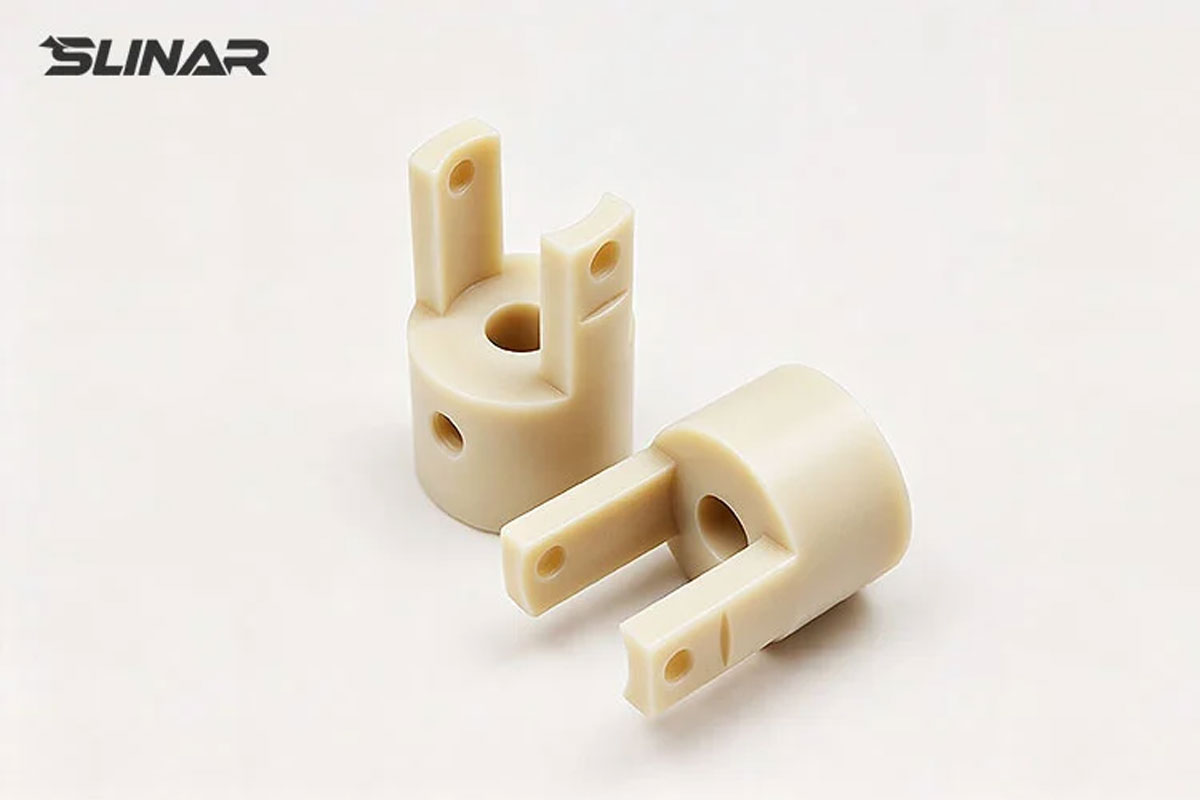
Order CNC PVC parts

Description

Applications

CNC machining produces parts with excellent mechanical properties, accuracy and repeatability from metal and plastic. 3-axis & 5-axis CNC milling available.

Strengths

Excellent mechanical properties,High accuracy & repeatabillity

Weaknesses

Greater geometry restrictions than 3D printing

Characteristics

Price
Mill Lead Time

As fast as 5 days

Processes

CNC Mill,CNC Lathe

Finishing Options

Available as-machined

Tolerance

With drawing: as low as +/- 0.005 mm,
No drawing: ISO 2768 medium

Available material grades

PVC FAQs

  • What type of PVC is used for CNC machining?

    Rigid, unplasticized PVC (uPVC) is the standard grade for CNC machining. Plasticized or flexible PVC contains plasticizers that make it softer and more prone to gumming up cutting tools, so it is rarely machined. Rigid PVC machines cleanly and holds dimensions well, making it suitable for pipes, fittings, valve components, and electrical housings.
  • What are the main advantages of machining PVC compared to other plastics?

    PVC offers excellent chemical resistance to acids and alkalis, good electrical insulation, UV resistance, and flame retardancy. It is also one of the lowest-cost engineering plastics, making it a cost-effective choice for chemical processing equipment, electrical components, and outdoor applications. Compared to materials like PEEK or PTFE, PVC is significantly cheaper and easier to machine.
  • What are the limitations of PVC for machined parts?

    PVC has poor thermal stability. It softens at relatively low temperatures, around 60°C for rigid PVC, so cutting heat can cause melting, smearing, or dimensional distortion if feeds and speeds are not controlled. It also has limited ductility and can be brittle under impact. Standard PVC is not suitable for food contact applications.
  • What tolerances can be achieved on CNC machined PVC parts?

    With a dimensioned drawing, tolerances as tight as ±0.005 mm can be achieved on well-designed PVC parts, though standard ISO 2768 medium is typical for general work. Because PVC is softer and more heat-sensitive than metals, maintaining tight tolerances requires sharp tooling, controlled feed rates, and adequate chip evacuation to prevent thermal growth.
  • How do you prevent melting or gumming when machining PVC?

    The key is to avoid rubbing and heat buildup. Use sharp, polished single-flute or O-flute cutters designed for plastics. These provide maximum chip clearance and prevent material from re-welding to the tool. Reduce spindle speed and increase feed rate to ensure the tool is cutting, not rubbing. Air blast or vacuum extraction is often more effective than liquid coolant for chip removal and heat management. If melting still occurs, reduce RPM further rather than slowing the feed.
  • What surface finish does machined PVC have?

    As-machined PVC typically has a smooth, relatively shiny or matte gray appearance with visible tool marks. It can be painted for aesthetic purposes or to enhance outdoor durability, provided the paint does not contain solvents that attack PVC. No additional finishing is usually required for functional parts.
  • What are the common applications for CNC machined PVC parts?

    PVC machined components are widely used in chemical processing such as tank linings, valve bodies, and fittings, in electrical and electronics for insulators and enclosures, in construction and piping for pipe fittings and flanges, in medical devices for non-implant components, and in automotive interior parts. Its chemical resistance and low cost make it ideal for industrial fluid handling and corrosion-resistant equipment.
  • Can PVC be bonded or assembled after machining?

    Yes. PVC is easily bonded using solvent cements specifically formulated for PVC. This allows complex parts to be built from multiple machined sub-assemblies rather than machined from a single large block, which can reduce material cost and machining time. PVC can also be welded, though solvent bonding is more common for machined components.
  • How does PVC compare to CPVC for machining?

    CPVC is a distinct material with higher chlorine content, offering improved heat resistance up to roughly 90 to 100°C versus 60°C for PVC, and greater ductility. CPVC machines similarly to PVC but is more expensive. Choose CPVC when the application involves hot water or elevated temperatures. Choose standard PVC for ambient-temperature chemical resistance at lower cost.
  • What design considerations reduce cost for PVC machined parts?

    Limit the number of setups and inspection dimensions. Avoid deep pockets with small radii, as these require long-reach tooling that is prone to deflection. Design from standard sheet or bar stock sizes where possible and assemble from subcomponents using PVC cement if the geometry is complex. Sharp internal corners should be avoided or specified with radii that match standard cutter sizes.
Get parts quickly with our processing
Complete CNC machining of parts within 1 week.
Get Free Quote
SLINAR CNC machining service
Ready to scale production?

Upload your CAD for a free quote. No minimum order.

Get Free Quote
Trustpilot