




CNC Machining with Care. From 1 pc to Mass Production. Free DFM Analysis. Get a Quote
Select a language
loading
CNC machining materials

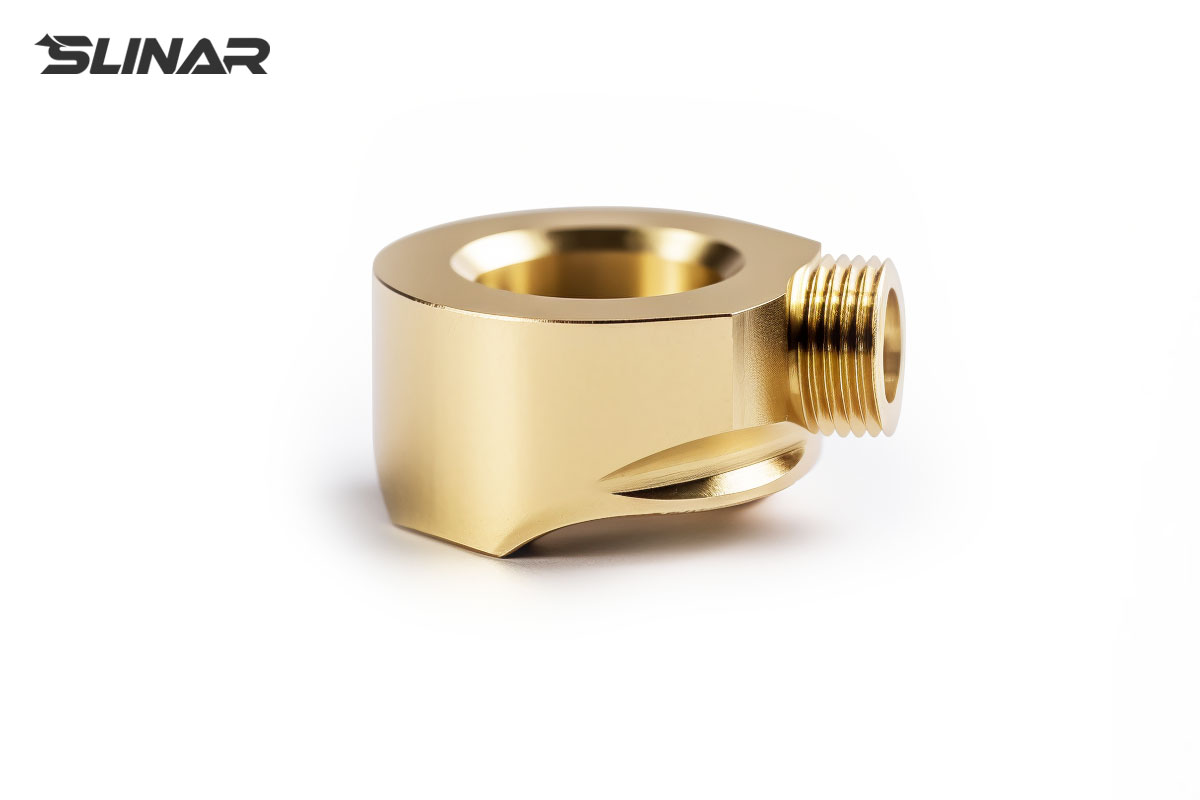
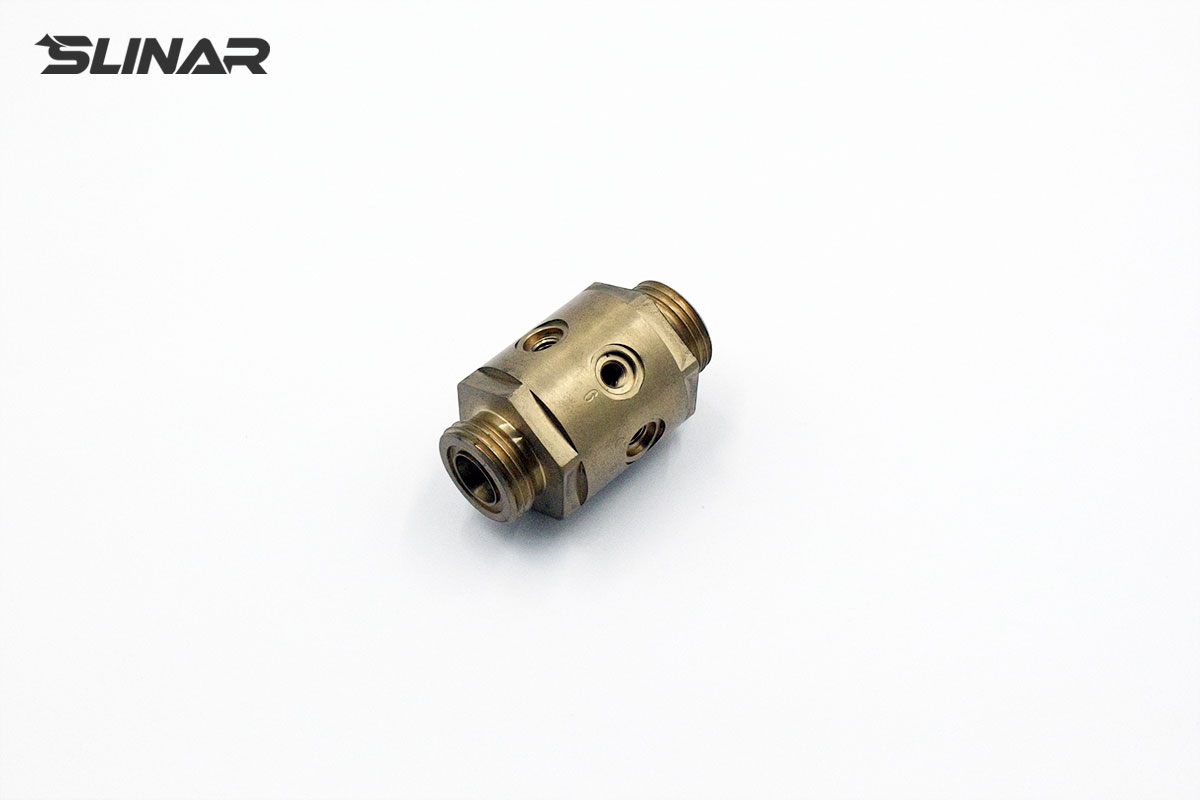
Brass CNC Machining

Low friction, excellent electrical conductivity, golden appearance. Brass is a metal alloy with good machinability and excellent electrical conductivity. Ideal for applications that require low friction.
Order CNC Brass parts

Description

Applications

CNC machining produces parts with excellent mechanical properties, accuracy and repeatability from metal and plastic. 3-axis & 5-axis CNC milling available.

Strengths

Excellent mechanical properties,High accuracy & repeatabillity

Weaknesses

Greater geometry restrictions than 3D printing

Characteristics

Price
Mill Lead Time

As fast as 5 days

Finishing Options

Media blasting

Available material grades

Brass machining

Brass is one of the easiest metals to machine, making it great for CNC machining. Brass also has other very useful properties making it great for different industries such as plumbing, electrical and medical. Overall, it has great durability. It being so versatile and easy to work with is what makes it such a common metal for parts in a wide variety of applications. CNC machined Brass parts begin as a raw piece of metal which is cut down bit by bit to create a desired shape or object. This process is done most accurately with a CNC (Computerized Numerical Control) machine which can produce almost any three dimensional object designed via CAD (Computer Aided Design) software.

Brass machined parts

We offer a complete CNC machining service for brass parts and can produce complex Brass parts in Brass C360. Brass parts are great for applications that require high strength, corrosion resistance, a low friction coefficient, electrical conductivity and overall versatility. We work with almost every kind of CNC mill and turning center, and are able to machine whatever you need, from simple, ‘as-machined’ workholdings to complex, organic geometries with tight tolerances. When creating Brass machined parts with us, you can apply up to 6 different post-processing/surface finishing options including bead blasting, powder coating, smooth machining and polishing.

Brass parts manufacturer

Our broad network of manufacturing partners contains over 240 Brass parts manufacturers. This provides us with a huge capacity for production and a wide range of machinery meaning that we can always fulfill orders and produce highly complex parts. Our CNC machine shops can produce custom Brass parts with CNC turning machines and 3 & 5 axis CNC milling machines. Our manufacturing partners offer CNC machined Brass parts in C360. Our network of manufacturing partners is vast and global meaning that we can produce parts locally to you and also produce parts overseas for faster lead times.

Brass FAQs

  • What brass grades do you machine most often?

    C36000 free-cutting brass is the standard grade for the vast majority of machined brass parts. Its lead content gives it a machinability rating of 100%, the benchmark against which other metals are measured, which translates directly into fast cycle times and low tool wear. C37700 is used for hot-forged fittings that require secondary machining. C38000 is a lower-cost die-casting alloy sometimes specified for less demanding parts. Lead-free alternatives such as C27450 and C69300 are available when RoHS or drinking water regulations apply.
  • Why is brass considered so easy to machine?

    Brass machines cleanly because its lead content acts as a built-in chip breaker. Chips break into small, manageable segments rather than forming long strings that tangle around the tool, and the material's relatively low shear strength means cutting forces are modest. The result is high cutting speeds, excellent as-machined surface finish, and long tool life. This is why brass parts are among the most cost-effective machined components, especially in medium to high volumes.
  • What tolerances can you achieve on brass parts?

    Standard turning and milling hold ±0.01 to ±0.02mm. Precision work holds ±0.005mm on diameters and critical features. Brass's dimensional stability and excellent machinability make tight tolerances easier to achieve than on most other metals. Concentricity within 0.01mm TIR is routine on turned parts. Surface finish as-machined typically reaches Ra 0.8 to 1.6μm, and polishing brings it to Ra 0.2μm.
  • Is leaded brass still allowed, or do I need a lead-free grade?

    It depends on the application and the market. C36000 contains lead and is restricted under RoHS for certain electrical and electronic uses, and under drinking water regulations in the US and EU for plumbing components in contact with potable water. For those applications, lead-free brasses such as C27450 or C69300 are required. For industrial fittings, pneumatic components, decorative hardware, and general machining, leaded brass remains widely used and cost-effective. Tell us the end application and target market at quoting, and we will confirm the appropriate grade.
  • What surface finishes are available for brass parts?

    As-machined brass has a bright, slightly yellow surface with visible tool marks. Polishing produces a high-gloss decorative finish, common for visible hardware. Brushing creates a directional grain for architectural and decorative work. Plating options include nickel for corrosion protection and a bright silver appearance, chrome for decorative wear resistance, tin for solderability, and gold for electrical contacts. Antiquing and chemical patina finishes are available for decorative hardware where an aged appearance is desired.
  • What are the typical applications for machined brass parts?

    Plumbing and fluid handling: fittings, valve bodies, faucet components, hose connectors. Electrical: terminals, contacts, connector pins, bus bars, grounding hardware. Industrial: instrumentation fittings, pneumatic connectors, gear components, pump wear rings. Automotive: fluid connectors, thermostat housings, sensor housings. Decorative hardware: door handles, hinges, marine hardware, architectural trim.
  • Can brass be used in marine environments?

    Brass has good corrosion resistance in fresh water and atmospheric conditions, but it is susceptible to dezincification in seawater, where the zinc content leaches out and leaves a weak, porous copper structure. For marine applications, dezincification-resistant brasses such as C35330 (DZR brass) or naval brass C46400 are the appropriate choices. If your part will see saltwater, specify the environment at quoting so we can recommend the right grade rather than defaulting to C36000.
  • How does brass compare to bronze and copper for machining?

    Brass machines far more easily than both. Bronze is harder and more wear-resistant but has lower machinability and is specified for bearings and heavy-load applications. Copper is soft and gummy, with a machinability rating around 20%, and is chosen for conductivity rather than machinability. If your requirement is electrical conductivity, copper is the right material despite the machining cost. If it is wear resistance, bronze. If it is cost-effective machined parts with good corrosion resistance and appearance, brass.
  • What is the maximum part size you can machine in brass?

    Milling up to 650 × 550 × 450mm. Turning up to 600mm diameter and 1,500mm length. Brass parts at the upper end of this range are typically fluid handling or industrial components where the material's corrosion resistance and machinability justify the size.
  • Why do brass parts sometimes crack or show porosity after machining?

    This usually traces back to the raw material rather than the machining process. Continuous-cast or extruded bar with internal porosity can open up when material is removed, revealing voids on a machined surface. For pressure-tight parts such as valve bodies or fittings, specify forged or continuously cast material with a soundness requirement, and consider pressure testing as part of inspection. We will flag this during DFM review if your drawing suggests a pressure boundary.
Get parts quickly with our processing
Complete CNC machining of parts within 1 week.
Get Free Quote
SLINAR CNC machining service
Ready to scale production?

Upload your CAD for a free quote. No minimum order.

Get Free Quote
Trustpilot