




CNC Machining with Care. From 1 pc to Mass Production. Free DFM Analysis. Get a Quote
Select a language
loading
CNC machining materials

PEI (Polyetherimide) CNC Machining

Amorphous material with exceptional strength and rigidity under long term heat exposure Characterized by a combination of outstanding thermal, mechanical and electrical properties, Polyetherimide (PEI) has made its place in high performance applications like automotive, aerospace, industrial and many more.
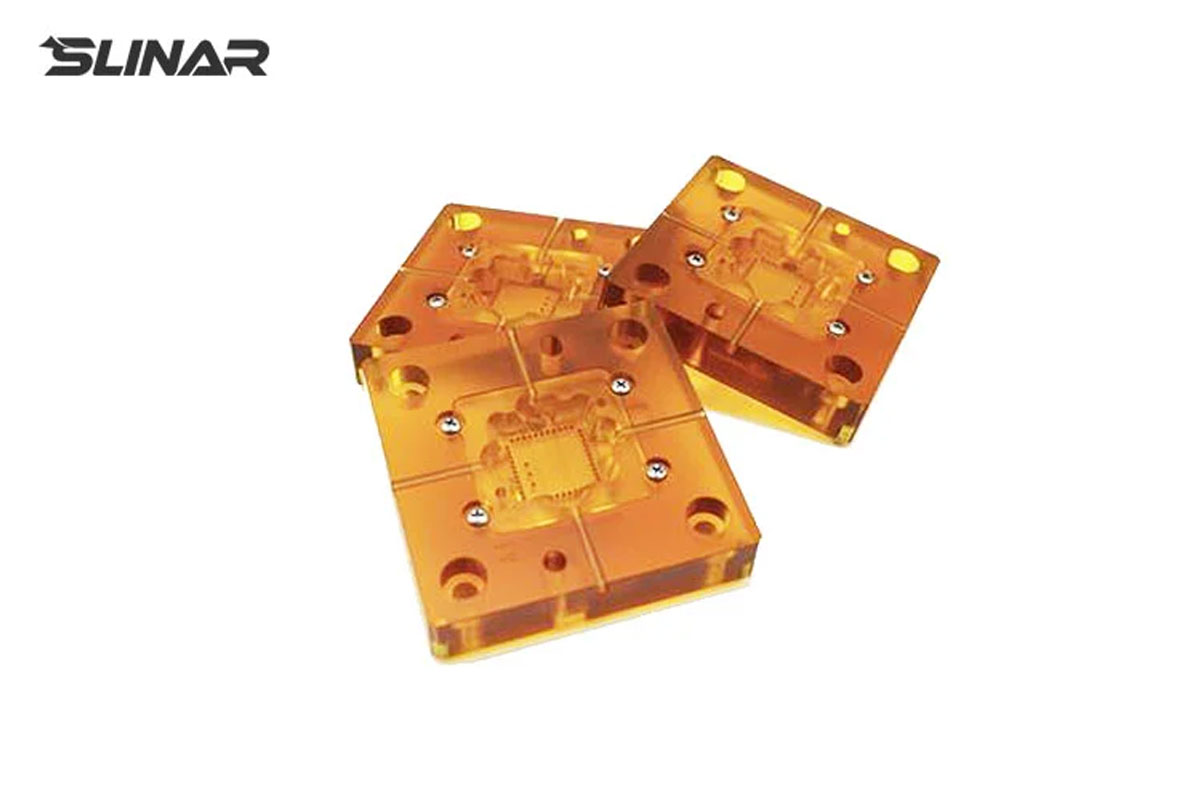
Order CNC PEI (Polyetherimide) parts

Description

Applications

CNC machining produces parts with excellent mechanical properties, accuracy and repeatability from metal and plastic. 3-axis & 5-axis CNC milling available.

Strengths

Excellent mechanical properties,High accuracy & repeatabillity

Weaknesses

Greater geometry restrictions than 3D printing

Characteristics

Price
Mill Lead Time

As fast as 5 days

Grades

PEI 1000 (Unfilled), PEI 2300 (30% Glass Fiber Reinforced), PEI 2400 (40% Glass Fiber Reinforced), PEI CF30 (30% Carbon Fiber Reinforced)

Available material grades

PEI (Polyetherimide) FAQs

  • What is PEI and why is it used in CNC machining?

    PEI, commonly known by the trade name Ultem, is an amorphous high-performance engineering thermoplastic. It offers high strength and stiffness, continuous service temperature up to roughly 170°C, excellent dimensional stability, and inherent flame retardancy with low smoke emission. It is also transparent in its natural amber form and has good electrical insulation properties. These characteristics make PEI a common choice for aerospace interior components, electrical and electronic parts, medical device housings, and semiconductor handling components where PEEK's higher temperature capability is not required but good mechanical properties and flame resistance are.
  • Which PEI grades do you machine most often?

    Unfilled PEI (Ultem 1000) is the standard grade for general-purpose parts requiring good strength and electrical insulation. 30% glass-filled PEI (Ultem 2300) offers higher stiffness, lower thermal expansion, and better dimensional stability, making it suitable for structural and load-bearing components. PEI with improved flame resistance or specific agency approvals is available for aerospace and rail applications. PEI is also supplied in extruded rod and plate for machining, and the grade and form should be specified on the drawing because properties differ between unfilled and reinforced versions.
  • How machinable is PEI compared to PEEK and other plastics?

    PEI machines reasonably well for a high-performance thermoplastic, better than PEEK in some respects because it is less prone to smearing and has good dimensional stability. It cuts cleanly with sharp carbide tooling and produces manageable chips. The main challenges are its notch sensitivity and its tendency to crack under stress if tooling is dull or if the part is subjected to excessive clamping force. Glass-filled PEI is more abrasive and will wear tooling faster than the unfilled grade. Overall, PEI is considered moderately machinable, and the process is closer to machining PEEK than to machining a soft commodity plastic.
  • What tolerances can you hold on PEI parts?

    Standard machining holds ±0.02 to ±0.05mm. Precision work holds ±0.01mm on critical features. PEI's low moisture absorption and good dimensional stability make it more predictable than nylon or acetal for tight-tolerance work. The limiting factor is usually residual stress and clamping distortion, particularly on thin-wall sections. Stress-relief annealing before finish machining is often advisable for parts with tight tolerances or complex geometry.
  • Does PEI require stress relief before or after machining?

    Yes, for parts with tight tolerances or thin sections. Extruded PEI carries internal stress from the manufacturing process, and machining removes material unevenly, which can cause the part to warp or crack after machining. Annealing the stock before machining, and sometimes between roughing and finishing, reduces this risk. The same applies to finished parts that will be exposed to elevated temperatures in service: stress relief improves dimensional stability and reduces the chance of stress cracking.
  • What surface finishes are available for PEI parts?

    As-machined PEI has a smooth surface with visible tool marks, typically Ra 1.6 to 3.2μm. Bead blasting produces a uniform matte finish. Polishing can achieve a higher gloss where appearance matters. Because PEI is often used for electrical and electronic components, no coating is usually applied. For visible aerospace interior parts, painting or a texture applied through the mold or by bead blasting is more common than decorative polishing. PEI's natural amber color can be specified, or the part can be painted where a specific color is required.
  • What are the typical applications for machined PEI parts?

    Aerospace: interior brackets, ducting components, and structural parts requiring flame retardancy and low smoke. Electrical and electronics: connector housings, insulators, and semiconductor handling components. Medical: device housings, sterilization trays, and instrument components that require repeated autoclaving. Industrial: pump and valve components, and high-temperature fixtures. PEI is often chosen where PEEK's temperature capability is unnecessary, but a commodity plastic would not survive the thermal or mechanical environment.
  • How does PEI compare to PEEK for machining and application?

    PEI is less expensive than PEEK and easier to machine in some respects, but its continuous service temperature is lower, around 170°C versus 260°C for PEEK. PEEK also offers better chemical resistance and is available in implantable grades. For applications up to roughly 170°C with good mechanical properties and flame resistance, PEI is usually the cost-effective choice. For higher temperatures, aggressive chemicals, or implantable medical devices, PEEK is the appropriate material. The decision usually comes down to the service temperature and the chemical environment.
  • What is the maximum part size you can machine in PEI?

    Milling up to 650 × 550 × 450mm. Turning up to 600mm diameter and 1,500mm length. PEI at the larger end of this range is typically aerospace interior components or large electrical insulators. Because PEI is notch-sensitive and prone to stress cracking, large parts benefit from stress-relief annealing and careful fixture design to avoid point loading during machining.
  • What documentation comes with PEI parts?

    Material test reports with grade identification and lot traceability. Dimensional inspection reports. Certificates of conformance. For aerospace and rail applications, material certificates showing flame, smoke, and toxicity compliance are provided. For medical applications, biocompatibility and sterilization compatibility documentation is available on request. If stress-relief annealing is performed, the heat treatment record is included.
Get parts quickly with our processing
Complete CNC machining of parts within 1 week.
Get Free Quote
SLINAR CNC machining service
Ready to scale production?

Upload your CAD for a free quote. No minimum order.

Get Free Quote
Trustpilot