




CNC Machining with Care. From 1 pc to Mass Production. Free DFM Analysis. Get a Quote
Select a language
loading
CNC machining materials

Invar CNC Machining

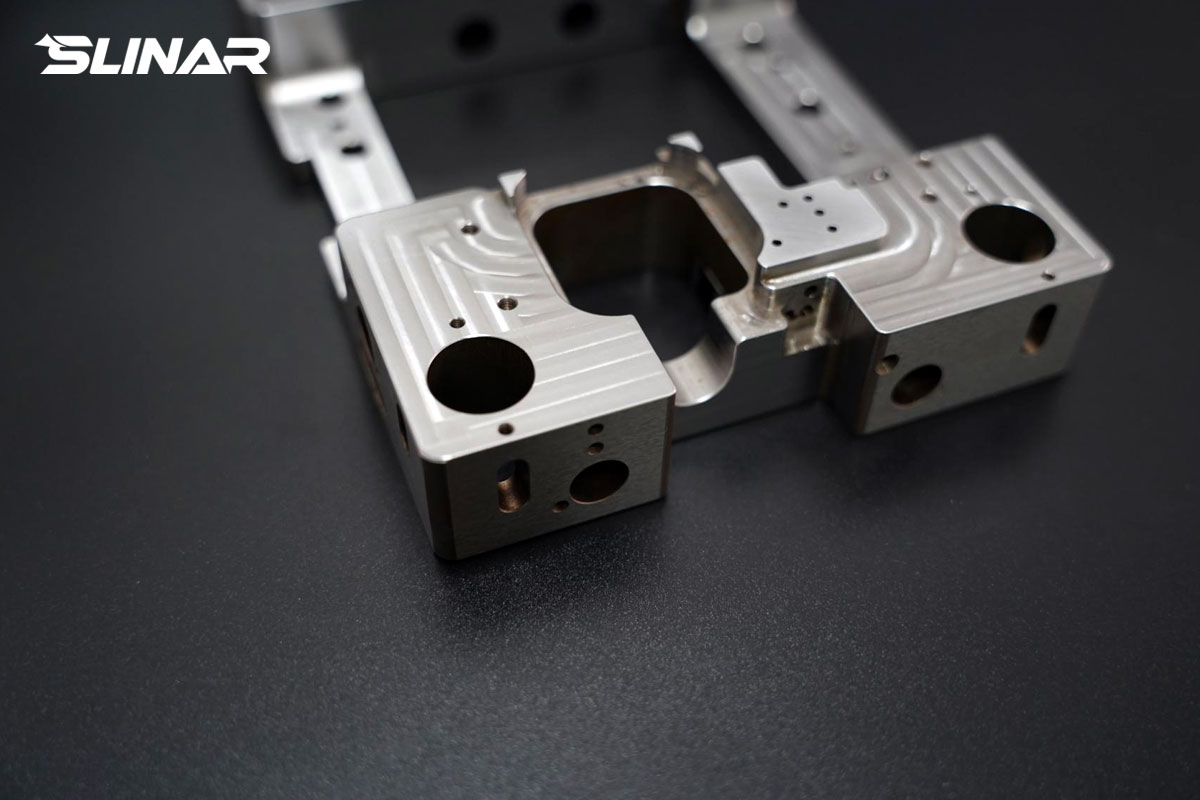
Nickel alloy with a very low coefficient of thermal expansion. Invar 36 is a nickel alloy with a very low coefficient of thermal expansion. Ideal for applications where high dimensional stability is required, such as precision instruments, engines valves and large aerostructure molds.
Order CNC Invar parts

Description

Applications

CNC machining produces parts with excellent mechanical properties, accuracy and repeatability from metal and plastic. 3-axis & 5-axis CNC milling available.

Strengths

Excellent mechanical properties,High accuracy & repeatabillity

Weaknesses

Greater geometry restrictions than 3D printing

Characteristics

Price
Mill Lead Time

As fast as 7 days

Finishing Options

Vibratory Tumbling, Media Blasting, Powdercoating

Tolerance

With drawing: as low as +/- 0.005 mm,
No drawing: ISO 2768 medium

Available material grades

Invar FAQs

  • What is Invar and why is it used in precision machining?

    Invar, also known as FeNi36 or 4J36, is a nickel-iron alloy containing approximately 36% nickel. Its defining characteristic is an extremely low coefficient of thermal expansion, typically around 1.2 × 10⁻⁶/°C at room temperature, which is roughly one-tenth that of ordinary steel. This means Invar parts barely change dimensions when temperature fluctuates. That property is why Invar is specified for precision instruments, satellite components, optical platforms, composite tooling, and any application where dimensional stability across temperature matters more than strength or weight.
  • Why is Invar difficult to machine?

    Invar combines several properties that make machining challenging. It work-hardens rapidly, so the surface hardens under the cutting tool and the next pass encounters a harder layer. Its thermal conductivity is very low, roughly one-third to one-quarter that of 45 steel, so cutting heat concentrates at the tool edge rather than dissipating into the chip. The material is also tough and ductile, producing stringy chips that tend to adhere to the tool and form a built-up edge. The practical result is elevated cutting forces, accelerated tool wear, and a real risk of thermal distortion on precision parts.
  • What tooling and cutting parameters are recommended for Invar?

    Carbide tooling with sharp positive rake geometry and wear-resistant coatings is standard. Cutting speeds should be kept moderate to control heat, and feed rates should be high enough to ensure the tool is cutting rather than rubbing, since rubbing accelerates work hardening. High-pressure coolant or minimum quantity lubrication helps manage the heat at the cutting edge. Because Invar's low expansion means the workpiece itself will not grow much with heat, but the machine and tooling still will, thermal stability of the setup matters as much as the cutting parameters.
  • What tolerances can you hold on Invar parts?

    Standard machining holds ±0.02 to ±0.05mm. Precision work holds ±0.01mm on critical features. Grinding reaches ±0.002mm where needed. The limiting factor on Invar is rarely the machine's positioning accuracy but rather residual stress and thermal effects. If your part has tight tolerances across a large dimension, stress-relief heat treatment between roughing and finishing is usually necessary to prevent the part from moving after machining.
  • Do Invar parts need stress relief after machining?

    Yes, and this is one of the most important process considerations for Invar. Machining induces residual stresses in the surface layer. Because Invar's whole purpose is dimensional stability, those stresses must be removed or they will cause the part to slowly change shape over time or when exposed to temperature cycles. The standard approach is to rough machine, stress-relieve, then finish machine. Skipping stress relief often means the part measures correctly at inspection and then drifts out of tolerance after a few days or weeks.
  • What surface finishes are available for Invar?

    As-machined Invar typically reaches Ra 1.6 to 3.2μm. Grinding brings surfaces to Ra 0.2 to 0.8μm where flatness or sealing performance matters. Because Invar is often used in optical and precision instrument applications, surface finish and flatness specifications frequently come together. Plating options include copper, nickel, and gold for electrical or corrosion-related requirements. Passivation is not typically specified for Invar because its corrosion resistance is already adequate for most controlled environments.
  • What are the typical applications for machined Invar parts?

    Composite layup tooling and mandrels for aerospace, where the tool must match the composite's expansion behavior. Precision optical mounts, laser housings, and instrument frames. Satellite and spacecraft components that see alternating sun and shadow. Electronic packaging, including copper-Invar-copper laminates for thermal management. Cryogenic equipment and LNG storage components, where Invar's low expansion remains useful at very low temperatures. In each case, the application exists because the part must not move with temperature.
  • What is the maximum part size you can machine in Invar?

    Milling up to 650 × 550 × 450mm. Turning up to 600mm diameter and 1,500mm length. Invar parts larger than this are usually composite tooling or large instrument structures, which typically fall outside standard machining capacity and are handled through specialized large-format facilities. For parts within our range, the main constraint is not size but thermal stability during machining, which we manage through temperature control and in-process verification.
  • What documentation comes with Invar parts?

    Material test reports certifying chemical composition and coefficient of thermal expansion. Dimensional inspection reports with flatness and parallelism data where specified. Certificates of conformance. Stress-relief heat treatment certificates where thermal processing is performed. Because Invar is usually specified for precision applications, the inspection report often carries more weight than the material cert, and we will confirm the measurement conditions and temperature at which dimensions were verified.
Get parts quickly with our processing
Complete CNC machining of parts within 1 week.
Get Free Quote
SLINAR CNC machining service
Ready to scale production?

Upload your CAD for a free quote. No minimum order.

Get Free Quote
Trustpilot