



CNC Machining with Care. From 1 pc to Mass Production. Free DFM Analysis. Get a Quote
Select a language
loading
CNC machining materials

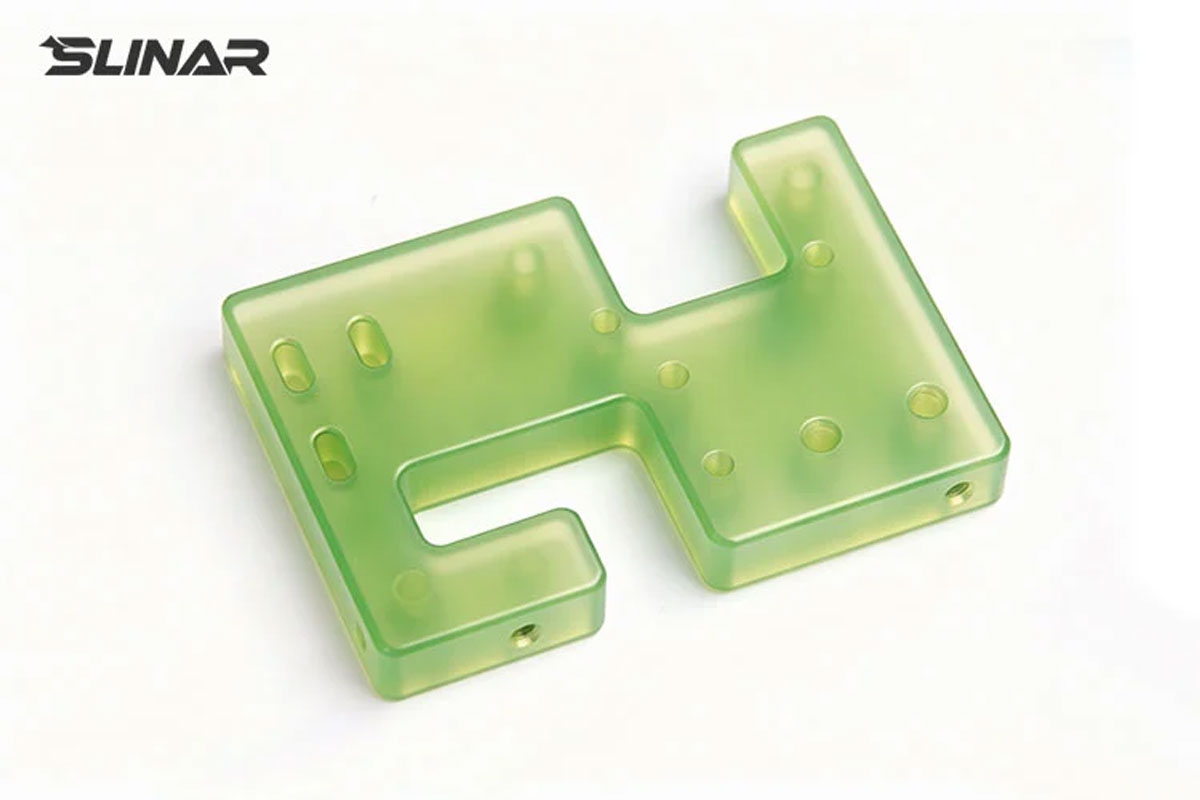
PU (Polyurethane) CNC Machining

It has excellent wear resistance, high tensile strength, tear resistance and load bearing capacity, and has good biocompatibility.

Order CNC PU (Polyurethane) parts

Description

Applications

CNC machining produces parts with excellent mechanical properties, accuracy and repeatability from metal and plastic. 3-axis & 5-axis CNC milling available.

Strengths

Excellent mechanical properties,High accuracy & repeatabillity

Weaknesses

Greater geometry restrictions than 3D printing

Characteristics

Price
Mill Lead Time

As fast as 5 days

Colors

White, Black, Natural, Beige, Cream, Gray, Light Gray, Dark Gray, Ivory, Translucent

Available material grades

PU (Polyurethane) FAQs

  • What is PU and why is it used in CNC machining?

    PU, or polyurethane, is a versatile polymer available in a wide range of hardnesses, from soft elastomers to rigid plastics. In CNC machining, the term usually refers to cast polyurethane in shore hardnesses ranging from about 60A to 75D, used for parts that need elasticity, abrasion resistance, and load-bearing capability. PU offers excellent resistance to wear, tear, and impact, good oil and grease resistance, and high load capacity compared to rubber. It is used for rollers, wheels, bumpers, seals, pads, and custom components in industrial equipment, automotive, and material handling.
  • Which PU grades do you machine most often?

    Cast polyurethane in the 80A to 95A shore range is the most common for machined parts, offering a balance of elasticity and machinability. Harder grades in the 60D to 75D range behave more like rigid plastics and can be turned and milled with conventional tooling. Softer grades below 70A are difficult to machine because they deform under cutting forces rather than shearing cleanly. PU is also supplied in different formulations—polyester-based grades offer better oil resistance, polyether-based grades offer better hydrolysis resistance. The formulation matters for the application environment, so it should be specified on the drawing.
  • How machinable is PU compared to other plastics?

    PU is more difficult to machine than rigid plastics, and the difficulty increases as the material gets softer. Soft PU deforms under the cutting tool rather than forming a clean chip, which leads to poor surface finish and dimensional inaccuracy. Harder grades machine more like a rigid plastic. Sharp tooling with high positive rake geometry, high cutting speeds, and light cuts are essential. Coolant or air blast helps control heat and clear chips, but the main issue is elastic deformation, not heat. PU is machinable, but it is not a material for aggressive parameters.
  • What tolerances can you hold on PU parts?

    Standard machining holds ±0.05 to ±0.15mm, depending on hardness. Precision work holds ±0.02 to ±0.05mm on harder grades. The limiting factor is the material's elasticity: soft PU will deflect under the cutting tool and under the measuring instrument, so the measured dimension depends on how the part is held. For soft grades, tolerances tighter than ±0.1mm are usually not realistic. Harder grades in the 60D to 75D range can be held to ±0.02mm with careful process control.
  • Does PU require stress relief or special handling after machining?

    PU is not prone to the stress cracking that affects rigid plastics like PPSU or PEI, but it does have its own handling considerations. Soft grades can be deformed by clamping and may not spring back fully if left clamped for long periods. Cut edges on soft PU can be ragged, and the material can absorb oils and contaminants from handling. For parts that will be used in contact with food or in clean environments, cleanliness during machining and packaging matters. Stress-relief annealing is not typically applied to PU.
  • What surface finishes are available for PU parts?

    As-machined PU has a surface that varies with hardness: harder grades take a smooth finish, while softer grades may show torn or ragged edges from cutting. Sharp tooling and high cutting speeds improve surface quality. Bead blasting is not commonly used on PU because the media can embed in the surface. Polishing is possible on harder grades. Because PU is usually specified for functional rather than decorative reasons, the finish requirement is typically driven by function—smooth enough to seal, or textured enough to grip.
  • What are the typical applications for machined PU parts?

    Industrial: rollers, wheels, bumpers, and pads for material handling and conveyor systems. Automotive: suspension bushings, seals, and custom mounts. Oil and gas: seals, wipers, and custom elastomer components where oil resistance matters. Food processing: FDA-compliant grades for rollers and contact parts. Mining and heavy equipment: wear pads, chute liners, and impact-absorbing components. PU is chosen where rubber would wear too quickly or where a custom shape is needed in a resilient material.
  • How does PU compare to rubber and to rigid plastics for machining?

    PU offers better abrasion resistance and load capacity than most rubbers, and it can be cast and machined into custom shapes more easily than rubber, which is usually molded. Compared to rigid plastics, PU is elastic rather than rigid, so it is used where flexibility, impact absorption, or sealing is required rather than structural support. PU machines less precisely than rigid plastics because of its elasticity, so it is not the right choice for tight-tolerance mechanical parts.
  • What is the maximum part size you can machine in PU?

    Milling up to 650 × 550 × 450mm. Turning up to 600mm diameter and 1,500mm length. PU parts at the large end of this range are typically rollers, pads, or custom bumpers. Because soft PU is difficult to hold and measure accurately, large soft parts may require special fixturing and should be reviewed during quoting.
  • What documentation comes with PU parts?

    Material test reports with hardness and formulation identification. Dimensional inspection reports, with the caveat that measurements on soft grades depend on the measurement method and should be agreed in advance. Certificates of conformance. For food contact applications, FDA or EU food contact compliance certificates are provided where applicable. For oil and gas applications, fluid compatibility data is available on request.
Get parts quickly with our processing
Complete CNC machining of parts within 1 week.
Get Free Quote
SLINAR CNC machining service
Ready to scale production?

Upload your CAD for a free quote. No minimum order.

Get Free Quote
Trustpilot