



CNC Machining with Care. From 1 pc to Mass Production. Free DFM Analysis. Get a Quote
Select a language
loading
CNC machining materials

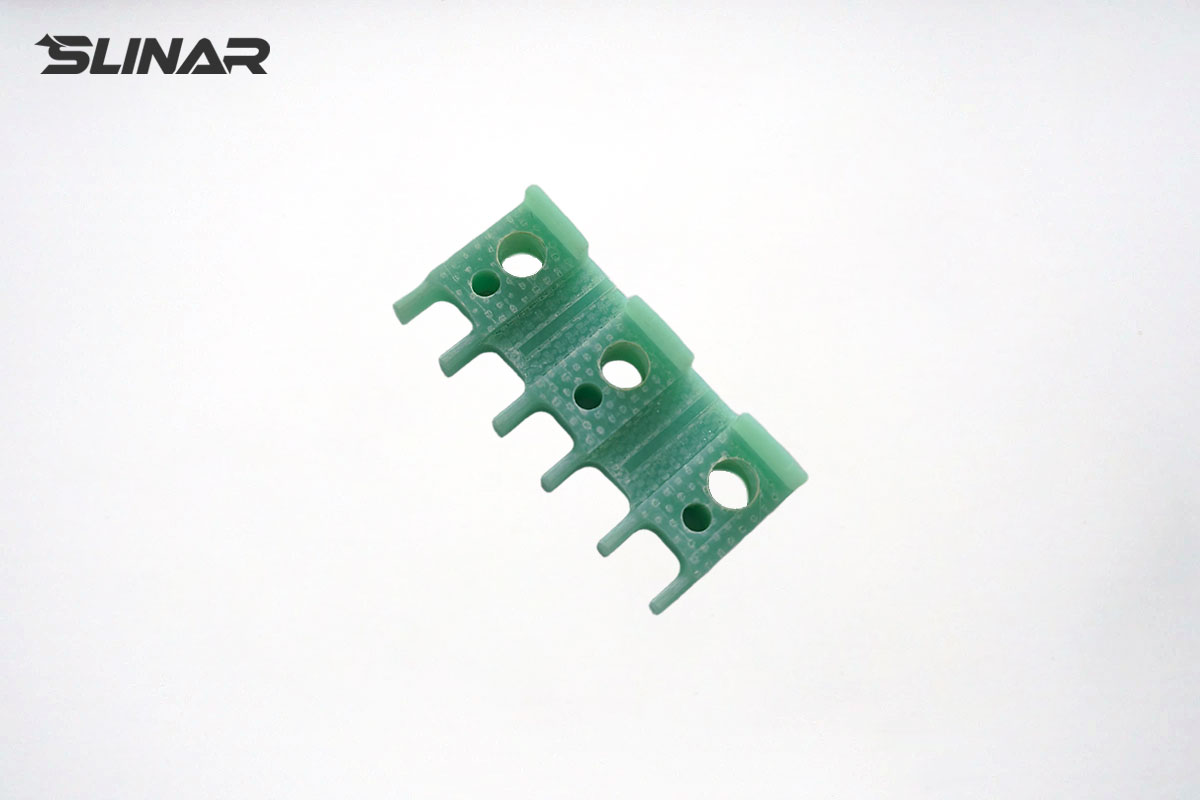
FR4 CNC Machining

Flame retardant glass fiber epoxy laminate. FR4 is a class of glass fiber epoxy laminate that is flame retardant, with similar properties to G-10.

Order CNC FR4 parts

Description

Applications

CNC machining produces parts with excellent mechanical properties, accuracy and repeatability from metal and plastic. 3-axis & 5-axis CNC milling available.

Strengths

Excellent mechanical properties,High accuracy & repeatabillity

Weaknesses

Greater geometry restrictions than 3D printing

Characteristics

Price
Mill Lead Time

As fast as 3 days

Grades

Standard FR4, High Tg FR4 (170°C+), Halogen-Free FR4, High Frequency FR4

Available material grades

FR4 FAQs

  • What is FR4 and why is it used in CNC machining?

    FR4 is a composite material made of woven fiberglass cloth impregnated with an epoxy resin, with the "FR" standing for flame retardant. It is the standard substrate for printed circuit boards, but it is also machined directly into structural and insulating components for electrical and electronic equipment. FR4 offers excellent electrical insulation, good mechanical strength, dimensional stability, and flame retardancy, at a relatively low cost. Machined FR4 parts include insulating plates, mounting boards, spacers, and structural components in electrical panels and electronic assemblies.
  • Which FR4 grades do you machine most often?

    Standard FR4 is the most common grade, offering a good balance of mechanical strength, electrical insulation, and cost. High-Tg FR4 is used where the part will see elevated temperatures, since the higher glass transition temperature improves thermal stability. FR4 is specified by thickness, and the grade and thickness should be confirmed on the drawing. Because FR4 is a composite rather than a homogeneous plastic, its properties vary with the glass weave and resin content, and this affects both machining behavior and the surface finish of the finished part.
  • How machinable is FR4 compared to other materials?

    FR4 machines reasonably well but has its own characteristics. The glass fiber reinforcement is abrasive and will wear tooling faster than machining homogeneous plastics, so carbide tooling is standard and tool life is shorter than when machining materials like Delrin or PE. The material produces fine dust rather than chips, which requires dust extraction for both surface quality and operator safety. Delamination at cut edges is a risk if the tooling is dull or the feed rate is too aggressive. Overall, FR4 is machinable with the right tooling and dust management, but it is not a material for aggressive parameters.
  • What tolerances can you hold on FR4 parts?

    Standard machining holds ±0.05 to ±0.1mm. Precision work holds ±0.02 to ±0.05mm on critical features. FR4's dimensional stability is good, but it is a composite, so the cut edge can show slight variation depending on the glass weave orientation. Thickness tolerances on the stock material also affect the finished part, particularly on thin sections. If your part has tight tolerances on thickness, confirm the stock tolerance at quoting because it may drive the achievable finished tolerance.
  • Does FR4 require special handling for dust and safety?

    Yes, and this is one of the most important considerations when machining FR4. The dust produced during machining contains glass fibers and cured epoxy resin, and it is a respiratory irritant. Machining should be done with dust extraction and appropriate operator protection. The dust should not be allowed to accumulate, and cleanup should follow controlled procedures. Because FR4 is often used in electrical applications, conductive dust from any metal tooling should also be kept separate. These are standard precautions in a shop that machines composites regularly.
  • What surface finishes are available for FR4 parts?

    As-machined FR4 has a matte surface with visible tool marks and a slightly rough edge where the glass fibers are cut. Bead blasting can produce a more uniform matte finish. Because FR4 is usually specified for functional rather than decorative reasons, coatings are uncommon. The cut edge is often the most visible feature, and a clean edge depends on sharp tooling and appropriate feed rates. FR4's natural color is a translucent green to yellow-green, though other colors are available depending on the resin system.
  • What are the typical applications for machined FR4 parts?

    Electrical: insulating plates, mounting boards, spacers, and structural components in electrical panels and switchgear. Electronics: test fixtures, component carriers, and insulating supports. Industrial: wear pads and insulating components in equipment where electrical isolation is required. Aerospace and rail: insulating structural components where flame retardancy and electrical insulation are required. In each case, FR4 is chosen for its combination of electrical insulation, mechanical strength, and flame resistance at moderate cost.
  • How does FR4 compare to G10 and to machinable plastics for machining and application?

    G10 is a similar glass-epoxy composite but is not flame retardant, while FR4 is. Both machine similarly, with the same abrasive wear on tooling and the same dust considerations. Compared to machinable plastics like Delrin or PE, FR4 is more abrasive, produces dust rather than chips, and is harder on tooling, but it offers much better electrical insulation and flame resistance. For electrical insulation and structural support in electronic equipment, FR4 is the standard choice. For general-purpose mechanical parts where electrical insulation is not required, a machinable plastic is usually cheaper and easier to work with.
  • What is the maximum part size you can machine in FR4?

    Milling up to 650 × 550 × 450mm. Turning up to 600mm diameter and 1,500mm length. FR4 is typically supplied in sheet form, so the practical limit is often the sheet size rather than the machine capacity. Large FR4 parts are usually insulating panels or structural boards, and thickness tolerance and flatness should be confirmed at quoting because they affect both machining and inspection.
  • What documentation comes with FR4 parts?

    Material test reports with grade identification, thickness, and lot traceability. Dimensional inspection reports. Certificates of conformance. For electrical applications, dielectric strength and flammability ratings are provided, including UL 94 V-0 rating where applicable. For aerospace and rail applications, additional flame, smoke, and toxicity data is available on request. If the part requires a specific surface finish or edge quality, the inspection report will note the agreed criteria.
Get parts quickly with our processing
Complete CNC machining of parts within 1 week.
Get Free Quote
SLINAR CNC machining service
Ready to scale production?

Upload your CAD for a free quote. No minimum order.

Get Free Quote
Trustpilot