




CNC Machining with Care. From 1 pc to Mass Production. Free DFM Analysis. Get a Quote
Select a language
loading
CNC machining materials

PPSU CNC Machining

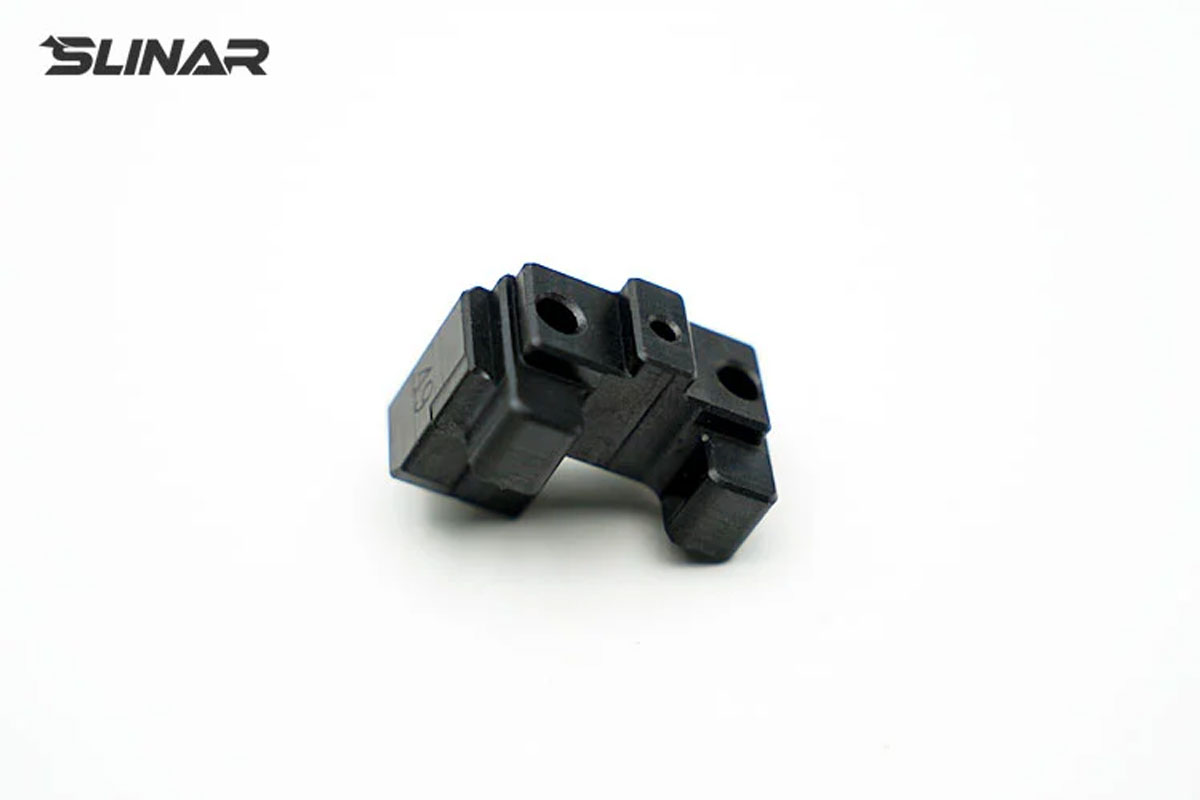
PPSU is an amorphus material, with high glass transition temperature and low moisture absorption. PPSU offers exceptional hydrolytic stability, and toughness superior to other commercially-available, high-temperature engineering resins. They offer high deflection temperatures and outstanding resistance to environmental stress cracking. This polymer is inherently flame retardant, and also has excellent thermal stability and good electrical properties.
Order CNC PPSU parts

Description

Applications

CNC machining produces parts with excellent mechanical properties, accuracy and repeatability from metal and plastic. 3-axis & 5-axis CNC milling available.

Strengths

Excellent mechanical properties,High accuracy & repeatabillity

Weaknesses

Greater geometry restrictions than 3D printing

Characteristics

Price
Mill Lead Time

As fast as 5 days

Grades

Standard PPSU, Glass-Filled PPSU (30%), Medical Grade PPSU

Available material grades

PPSU FAQs

  • What is PPSU and why is it used in CNC machining?

    PPSU, or polyphenylsulfone, is a high-performance amorphous thermoplastic known for its exceptional toughness, resistance to repeated steam sterilization, and good hydrolytic stability. It offers continuous service temperature around 150°C, excellent impact strength even at low temperatures, and resistance to hot water and steam—properties that distinguish it from the more common polysulfones. These characteristics make PPSU a preferred material for medical and dental applications that require repeated autoclaving, food processing equipment, plumbing components that see hot water, and aerospace interior parts where toughness and flame resistance matter.
  • Which PPSU grades do you machine most often?

    Unfilled PPSU is the standard grade for most machined parts, offering the best balance of toughness and machinability. PPSU is also available with glass fiber reinforcement for higher stiffness and lower thermal expansion, though the reinforced grades are more abrasive to tooling and tend to be less impact-resistant than the unfilled version. Natural PPSU is a transparent, honey-colored material; opaque and colored versions are available. Because PPSU is often specified for medical applications, the grade and its associated certifications should be confirmed on the drawing.
  • How machinable is PPSU compared to PEEK and polysulfone?

    PPSU machines better than PEEK and roughly similarly to polysulfone, but it has its own characteristics. It is tough and somewhat gummy, which means sharp tooling and generous rake angles matter. It tends to produce continuous chips rather than fine dust, so chip evacuation is manageable. The main risk is stress cracking if the part is subjected to excessive clamping force or if residual stress is left in the material after machining. Glass-filled PPSU is more abrasive and will wear tooling faster than the unfilled grade. Overall, PPSU is considered moderately machinable for a high-performance thermoplastic.
  • What tolerances can you hold on PPSU parts?

    Standard machining holds ±0.02 to ±0.05mm. Precision work holds ±0.01mm on critical features. PPSU's low moisture absorption and good dimensional stability make it predictable for tight-tolerance work, better than nylon or acetal in that respect. The main limitations are clamping distortion on thin walls and residual stress, which can cause the part to move after machining. Stress-relief annealing is advisable for parts with tight tolerances, complex geometry, or thin sections.
  • Does PPSU require stress relief before or after machining?

    Yes, for precision parts. PPSU stock carries internal stress from the extrusion or compression molding process, and machining removes material unevenly, which can cause warping or stress cracking after machining. Annealing the stock before machining, and sometimes between roughing and finishing, reduces this risk. The same applies to finished parts that will see repeated steam sterilization: stress relief improves dimensional stability and reduces the chance of environmental stress cracking. Because PPSU is often used in medical and food applications where failure is expensive, this step is not one to skip.
  • What sterilization methods is PPSU compatible with?

    PPSU is compatible with repeated steam autoclaving, typically withstanding several thousand cycles without significant degradation, which is why it is used for reusable medical and dental instruments, trays, and sterilization containers. It is also compatible with gamma radiation and ethylene oxide sterilization. Not all high-performance thermoplastics tolerate repeated steam exposure—PPSU's hydrolytic stability is one of its main selling points. If your part will be sterilized by a specific method, confirm this at quoting so the grade and the machining process are aligned with the sterilization cycle.
  • What surface finishes are available for PPSU parts?

    As-machined PPSU has a smooth surface with visible tool marks, typically Ra 1.6 to 3.2μm. Bead blasting produces a uniform matte finish. Polishing can achieve a higher gloss where appearance matters. Because PPSU is often used in medical and food applications, the surface must be cleanable and free of features that trap contaminants, so the finish specification often includes a cleanliness requirement rather than just a roughness number. PPSU's natural color is transparent amber; it can be supplied in opaque colors for specific applications.
  • What are the typical applications for machined PPSU parts?

    Medical and dental: sterilization trays, instrument handles, device housings, and reusable components that see repeated autoclaving. Food processing: components that contact hot food or are cleaned with hot water and steam. Plumbing: hot water fittings and components where toughness and hydrolytic stability matter. Aerospace: interior components requiring flame resistance and toughness. Industrial: pump and valve components in hot water or steam service. In each case, the application depends on PPSU's combination of toughness, thermal stability, and resistance to hot water and steam.
  • How does PPSU compare to PEEK and PSU for machining and application?

    PPSU is tougher than PSU, with better hydrolytic stability and resistance to repeated steam sterilization. Compared to PEEK, PPSU has lower continuous service temperature, roughly 150°C versus 260°C for PEEK, and lower chemical resistance, but it is significantly less expensive and easier to machine. For medical applications requiring repeated autoclaving, PPSU is often the cost-effective choice. For higher temperatures, aggressive chemicals, or implantable applications, PEEK is the appropriate material. PSU sits between them on cost and performance but is less resistant to repeated steam exposure than PPSU.
  • What is the maximum part size you can machine in PPSU?

    Milling up to 650 × 550 × 450mm. Turning up to 600mm diameter and 1,500mm length. PPSU stock is available in a range of plate and rod sizes, though very large sections may be limited by stock availability. Because PPSU is notch-sensitive and prone to stress cracking, large parts benefit from stress-relief annealing and careful fixture design to avoid point loading during machining.
  • What documentation comes with PPSU parts?

    Material test reports with grade identification and lot traceability. Dimensional inspection reports. Certificates of conformance. For medical applications, biocompatibility and sterilization compatibility documentation is available on request, including data on autoclave cycle tolerance. For food contact applications, FDA and EU food contact compliance certificates are provided where applicable. If stress-relief annealing is performed, the heat treatment record is included.
Get parts quickly with our processing
Complete CNC machining of parts within 1 week.
Get Free Quote
SLINAR CNC machining service
Ready to scale production?

Upload your CAD for a free quote. No minimum order.

Get Free Quote
Trustpilot