CNC Machining with Care. From 1 pc to Mass Production. Free DFM Analysis. Get a Quote
Select a language
loading
CNC machining materials

PE (Polyethylene) CNC Machining

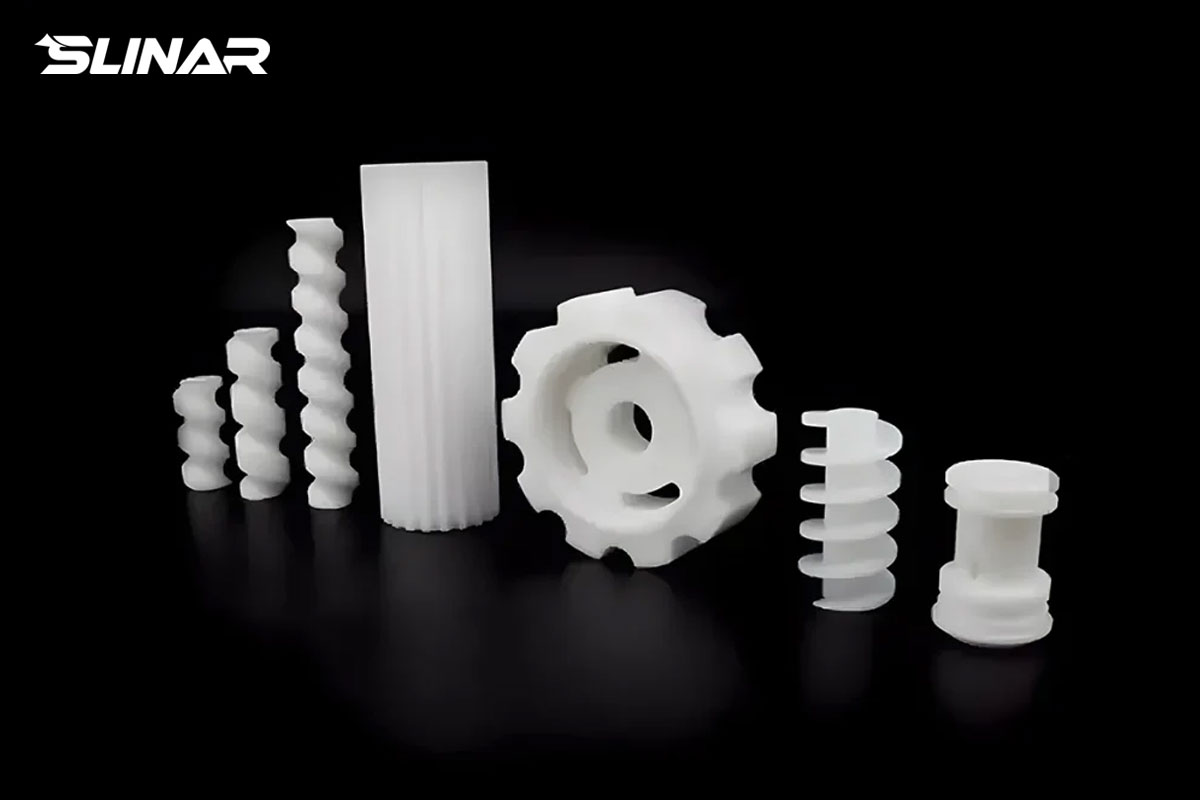
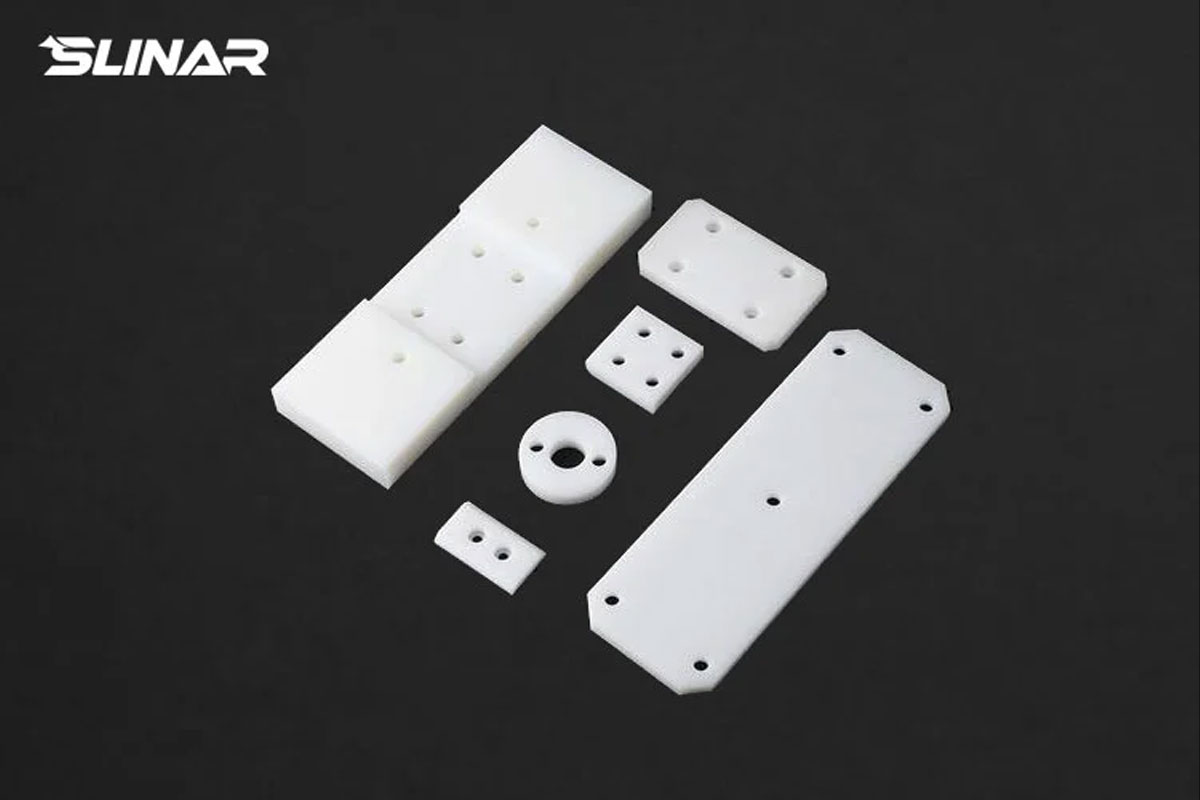
Excellent strength-to-weight ratio, impact and weather resistant. Polyethylene (PE) is a thermoplastic with high strength-to-weight ratio, good impact strength and excellent weather resistance.

Order CNC PE (Polyethylene) parts

Description

Applications

CNC machining produces parts with excellent mechanical properties, accuracy and repeatability from metal and plastic. 3-axis & 5-axis CNC milling available.

Strengths

Excellent mechanical properties,High accuracy & repeatabillity

Weaknesses

Greater geometry restrictions than 3D printing

Characteristics

Price
Mill Lead Time

As fast as 3 days

Colors

White, black

Available material grades

PE (Polyethylene) FAQs

  • What is PE and why is it used in CNC machining?

    PE, or polyethylene, is a semi-crystalline thermoplastic available in several density grades, from low-density polyethylene through high-density polyethylene and ultra-high-molecular-weight polyethylene. In CNC machining, HDPE and UHMW-PE are the grades most commonly used. PE offers excellent chemical resistance, very low moisture absorption, good impact strength, and low friction. It is inexpensive, easy to machine, and available in large stock sizes. These properties make it a common choice for chemical tanks, cutting boards, wear strips, guide rails, rollers, and food processing components.

  • Which PE grades do you machine most often?

    HDPE is the workhorse grade, offering a good balance of stiffness, impact resistance, and machinability. It is commonly used for tanks, fittings, cutting boards, and general-purpose components. UHMW-PE is used where maximum wear resistance and low friction are required, such as conveyor wear strips, guide rails, and chute liners. LDPE is softer and more flexible, used for less demanding applications. PE is also available in FDA-compliant and UV-stabilized grades, and the grade should be specified on the drawing because properties vary significantly between them.
  • How machinable is PE compared to other plastics?

    PE machines easily, among the easiest of the engineering plastics. It cuts cleanly with sharp tooling and produces continuous chips that are easy to evacuate. HDPE holds dimensions reasonably well and takes a good surface finish. UHMW-PE is softer and more prone to deformation under clamping and cutting forces, so it requires sharper tooling and lighter cuts. The main challenges with PE are its high thermal expansion, which affects tight tolerances on large parts, and its tendency to produce long stringy chips that can tangle if chip evacuation is poor. Overall, PE is a forgiving material for machining.
  • What tolerances can you hold on PE parts?

    Standard machining holds ±0.05 to ±0.1mm. Precision work holds ±0.02 to ±0.05mm on smaller parts. PE's high thermal expansion is the limiting factor on larger parts: a part that measures correctly at machining temperature may be out of tolerance at service temperature. For parts with tight tolerances across large dimensions, the measurement temperature should be agreed in advance. UHMW-PE is more difficult to hold tightly than HDPE because of its lower stiffness and greater creep under load.
  • Does PE require stress relief before or after machining?

    PE is less prone to stress cracking than rigid amorphous plastics like PSU or PEI, but it does have internal stress from the extrusion process, and machining removes material unevenly. For parts with tight tolerances or complex geometry, annealing the stock before machining reduces the risk of warping. PE's high thermal expansion also means that parts can move after machining as they equilibrate to room temperature, so allowing the part to stabilize before final inspection is advisable.
  • What surface finishes are available for PE parts?

    As-machined PE has a smooth surface with visible tool marks, typically Ra 1.6 to 3.2μm. Bead blasting produces a uniform matte finish. Because PE is usually specified for functional rather than decorative reasons, coatings are uncommon. PE's natural color is translucent white to opaque white, and it can be supplied in black or other colors for specific applications. For food contact applications, the surface must be cleanable, so the finish specification often includes a cleanliness requirement.
  • What are the typical applications for machined PE parts?

    Chemical processing: tanks, fittings, and components that resist acids and alkalis. Food processing: cutting boards, wear strips, and FDA-compliant contact parts. Material handling: conveyor wear strips, guide rails, and chute liners in UHMW-PE. Industrial: rollers, bushings, and wear pads. Water treatment: components that see chemical exposure and moisture. PE is often chosen where chemical resistance and low cost matter more than strength or temperature resistance.
  • How does PE compare to PP and PTFE for machining and application?

    PE and PP are both inexpensive, chemically resistant polyolefins. PP is stiffer and has better temperature resistance, while PE has better impact strength and lower friction, particularly in UHMW-PE. PTFE offers superior chemical resistance and a lower coefficient of friction, but it is much more expensive and more difficult to machine. For general chemical resistance and low cost, PE is often the practical choice. For maximum chemical resistance or non-stick performance, PTFE is specified.
  • What is the maximum part size you can machine in PE?

    Milling up to 650 × 550 × 450mm. Turning up to 600mm diameter and 1,500mm length. PE is available in large stock sizes, and its low cost makes it practical for large components such as tanks and wear liners. Because PE has high thermal expansion, large parts require careful temperature control during machining and inspection to hold tolerances.
  • What documentation comes with PE parts?

    Material test reports with grade identification and lot traceability. Dimensional inspection reports. Certificates of conformance. For food contact applications, FDA and EU food contact compliance certificates are provided where applicable. For chemical processing applications, chemical resistance data is available on request. If annealing is performed, the heat treatment record is included.
Get parts quickly with our processing
Complete CNC machining of parts within 1 week.
Get Free Quote
SLINAR CNC machining service
Ready to scale production?

Upload your CAD for a free quote. No minimum order.

Get Free Quote
Trustpilot