



CNC Machining with Care. From 1 pc to Mass Production. Free DFM Analysis. Get a Quote
Select a language
loading
CNC machining materials

Inconel CNC Machining

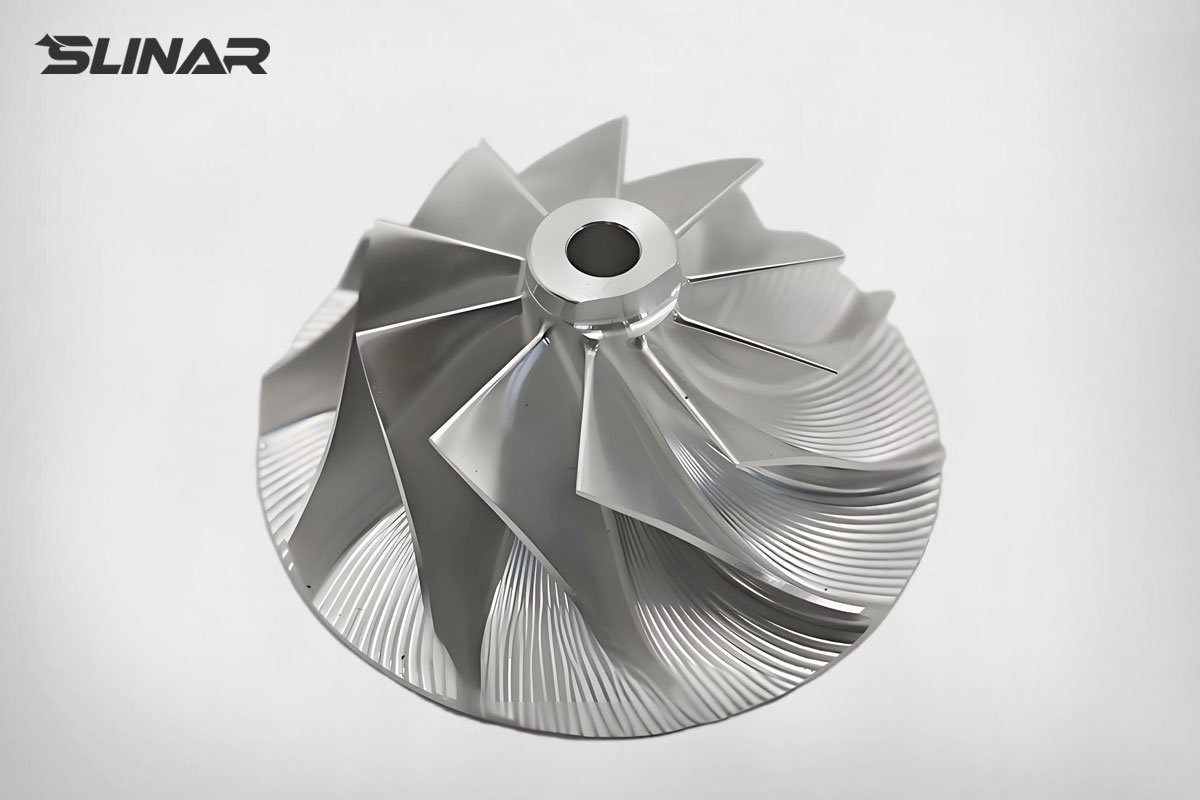
High-strength and corrosion-resistant nickel alloy. Inconel is a high-strength, corrosion-resistant nickel alloy. Ideal for aerospace applications.

Order CNC Inconel parts

Description

Applications

CNC machining produces parts with excellent mechanical properties, accuracy and repeatability from metal and plastic. 3-axis & 5-axis CNC milling available.

Strengths

Excellent mechanical properties,High accuracy & repeatabillity

Weaknesses

Greater geometry restrictions than 3D printing

Characteristics

Price
Mill Lead Time

As fast as 10 days

Alloys

Inconel 600, 625, 718, X-750, 825

Finishing Options

Passivation, Pickling, Electroplating, Grinding, Polishing, Sandblasting, Heat Treatment (Annealing, Aging).


Available material grades

Inconel FAQs

  • What Inconel grades do you machine most often?

    Inconel 718 is the workhorse grade, accounting for the majority of aerospace and oil and gas work. It offers high strength up to roughly 700°C and is precipitation-hardenable to achieve its properties. Inconel 625 is chosen for applications requiring corrosion resistance up to about 980°C, particularly in chemical processing and marine environments. Inconel 600 is used for high-temperature oxidation resistance where strength requirements are less severe. We also machine X-750 and 725 on request. The grade matters because each has different hardness and work-hardening behavior, which directly affects tooling and cycle time.
  • Why is Inconel so difficult to machine?

    Inconel resists cutting because of its combination of high work-hardening rate, toughness, and low thermal conductivity. The material hardens rapidly under the cutting tool, so the next pass encounters a harder surface. Heat generated during cutting does not dissipate into the chip efficiently, so it concentrates at the tool edge, accelerating wear. The material also has a strong tendency to weld to the tool and form a built-up edge. The practical result is short tool life, low cutting speeds, and high cutting forces.
  • What cutting speeds and tooling are required?

    Inconel is machined at surface speeds far below those used for steel or aluminum, typically in the range of 30 to 60 m/min depending on the operation and hardness. Carbide tooling with high positive rake geometry is standard. Ceramic inserts can be used for roughing where the setup is rigid enough, but they leave a work-hardened layer that must be removed in subsequent operations. Tool coatings and coolant delivery are critical. High-pressure coolant, ideally through the tool, helps manage the heat at the cutting edge. HSS tooling is not suitable for production work on Inconel.
  • What tolerances can you hold on Inconel parts?

    Standard milling and turning hold ±0.02 to ±0.05mm. Precision work holds ±0.01mm on critical features. Holding tighter than that on Inconel is possible but expensive because the material's work hardening and heat generation make consistent dimensional control harder than on steel or aluminum. Thin walls and deep pockets compound the difficulty. If your design calls for both tight tolerances and thin features, we will review the geometry during DFM and may recommend stress-relief steps or a different machining sequence.
  • Do you machine Inconel in the hardened or annealed condition?

    This depends on the part and the drawing. Many aerospace components are rough-machined in a softer, pre-heat-treated state to allow more aggressive material removal, then heat-treated and finished in the hardened condition. If your drawing specifies a final hardness, we will plan the machining sequence around the heat treatment, including allowances for distortion. Machining Inconel in its fully hardened state is possible but substantially slower and more costly.
  • What surface finishes are achievable on Inconel?

    As-machined Inconel typically reaches Ra 1.6 to 3.2μm. Grinding brings surfaces to Ra 0.2 to 0.8μm where bearing or sealing performance matters. Polishing is available for turbine components and flow surfaces. Passivation is often specified for aerospace parts to remove surface contamination and restore corrosion resistance. Because Inconel is usually specified for extreme environments, the finish specification often comes with a surface integrity requirement, such as no recast layer or no tensile residual stress, rather than just a roughness number.
  • What are the typical applications for machined Inconel parts?

    Aerospace: turbine blades, combustion chambers, engine casings, exhaust components, and high-temperature fasteners. Oil and gas: downhole tools, wellhead components, subsea connectors, and high-pressure valve bodies. Power generation: gas turbine components and heat exchanger parts. Chemical processing: reactor vessels and corrosion-resistant pump components. In nearly every case, Inconel is chosen because the operating temperature or corrosive environment eliminates other materials.
  • What is the maximum part size you can machine in Inconel?

    Milling up to 650 × 550 × 450mm. Turning up to 600mm diameter and 1,500mm length. Inconel at the upper end of this range is demanding: the material's toughness and heat generation mean that large parts require careful thermal management and rigid setups to avoid distortion and tool failure. We will assess the geometry during quoting and confirm feasibility.
  • What documentation comes with Inconel parts?

    Material test reports with full traceability to the mill heat lot, including chemical composition and mechanical properties. Dimensional inspection reports. Certificates of conformance. For aerospace and defense work, AS9102 First Article Inspection and full traceability documentation are standard. Heat treatment certificates are provided where thermal processing is specified. Because Inconel is frequently used in flight-critical and safety-critical applications, the documentation package is usually more extensive than for commercial parts.
Get parts quickly with our processing
Complete CNC machining of parts within 1 week.
Get Free Quote
SLINAR CNC machining service
Ready to scale production?

Upload your CAD for a free quote. No minimum order.

Get Free Quote
Trustpilot